
Smart blinds opener
Context
This was a group project sprint for a Product Design class where we were tasked with creating an Arduino-based device that solves an everyday problem. Our team designed a smart blind opener that automatically opens and closes window blinds based on ambient light levels, eliminating the need for manually opening/closing them everyday. The challenge was to create a compact, reliable system that could attach to an existing window frame and blind wand without permanently modifying either. Combining mechanical components with electronics and sensor-based controls, we aimed to develop a functional, user-friendly solution that seamlessly integrates into an existing home environment within two weeks.
Solution
Our final design uses an Arduino Uno, photoresistor, 28BYJ-48 stepper motor, and ULN2003 motor driver to automatically adjust the blinds in response to changing light levels. The photoresistor measures ambient light and sends an analog signal to the Arduino, which converts it into a 10-bit analog-to-digital converter (ADC) reading between 0 and 1023. When the reading rises above 600, the Arduino signals the stepper motor to rotate the blind wand and open the blinds. When the reading falls below 450, the motor reverses to close them. These separate thresholds create a hysteresis band that prevents small fluctuations in light from repeatedly triggering the motor.
My primary focus was on the mechanical components and mechanical integration of the system. I worked on designing a custom coupler to transfer rotational motion from the stepper motor to the existing blind wand, ensuring a secure connection without permanently modifying the wand. I also contributed to the motor mounting structure, considering alignment, stability, and how the device could attach to the window while remaining removable.
A key challenge was integrating the mechanical assembly with the electrical components to ensure reliable operation within the constraints of the existing window setup, for example, allowing the photoresistor to be positioned to “see” the light. By combining sensor-based control with a custom mechanical assembly, we developed a compact system that automatically operates existing blinds without requiring user input.
Skills
Prototyping, CAD, Arduino, System Integration
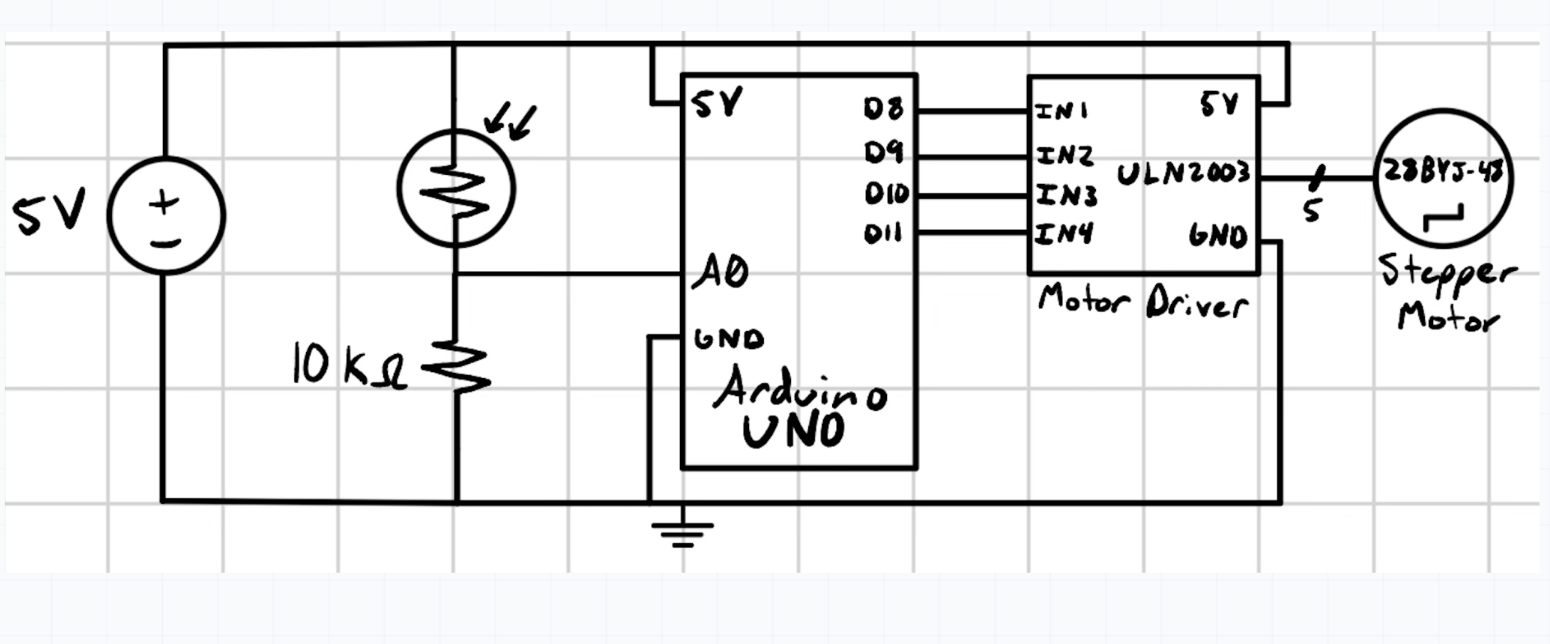
Circuit schematic
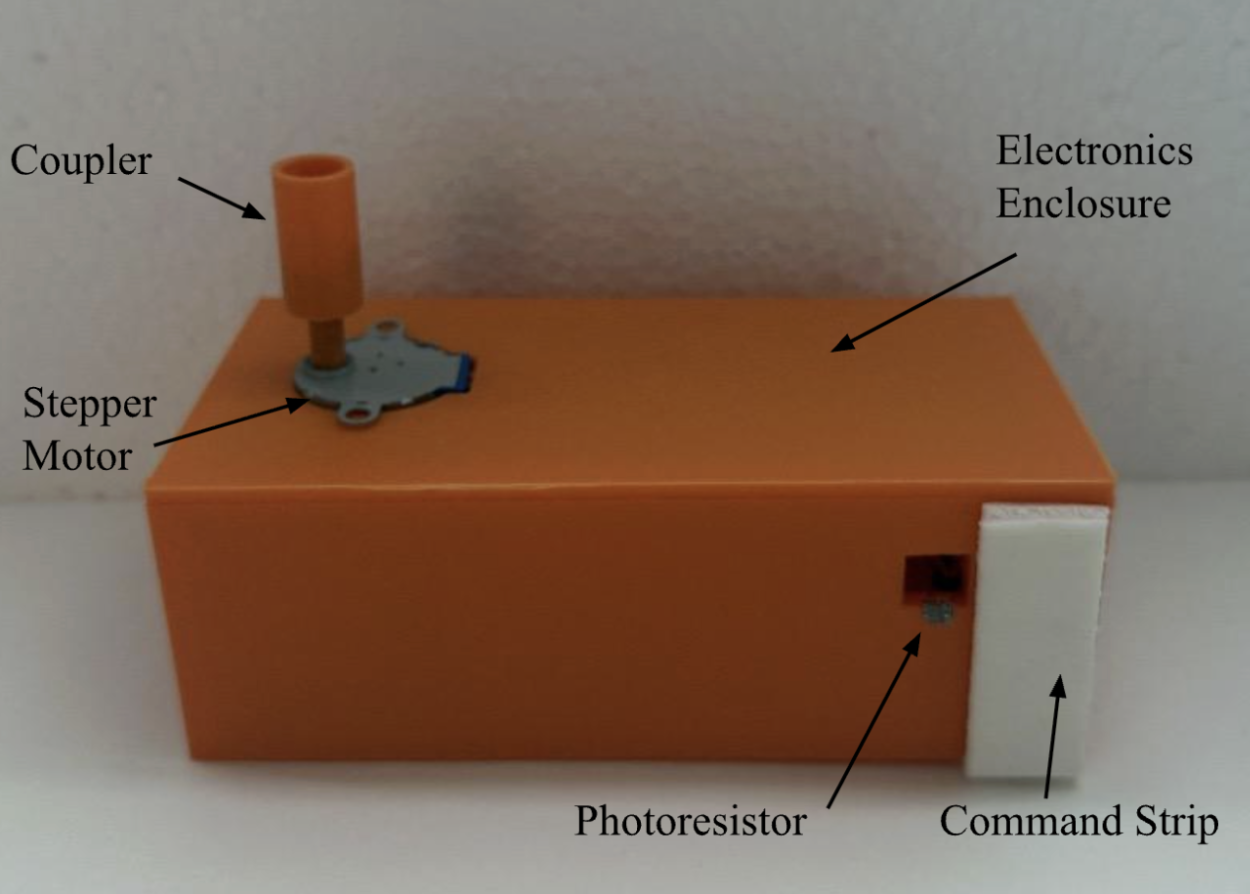
Final device diagram
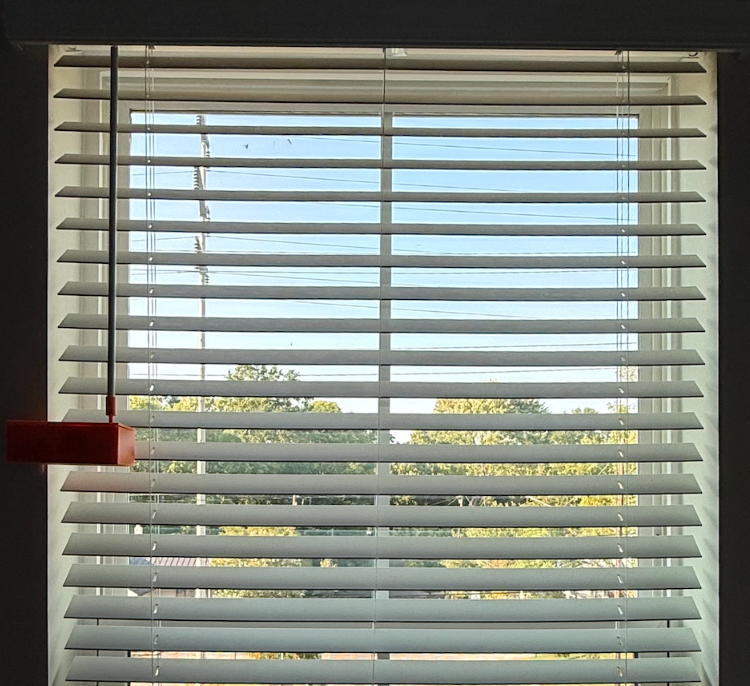
Device in use
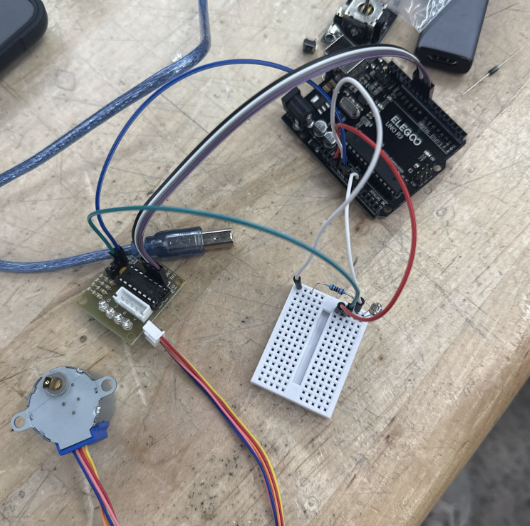
Prototyping motor and photoresistor
At the beginning of the video, a finger covers the photoresistor and then moves away to simulate a transition from darkness to light, demonstrating how the system responds when the sensor reading rises above the opening threshold.